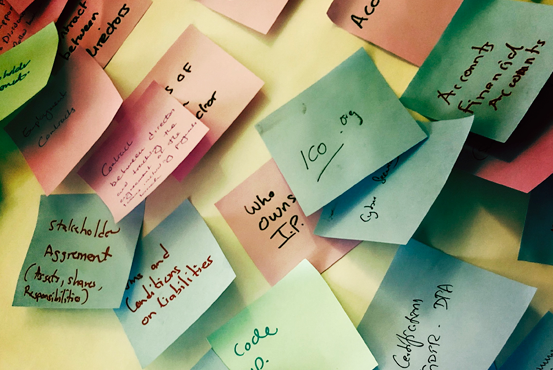
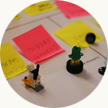
Rooted in the practices of designers, this methodology has been widely adopted in business, education and other fields to tackle complex challenges and develop effective solutions. Rather than focusing solely on technology or profitability, design thinking places people [the end users] at the heart of the process.
Core concepts are:
Human-centered
Abductive reasoning
Iteration and experimentation
Collaboration
Action over discussion
In Practice
Design thinking’s collaborative nature brings together multidisciplinary teams, fostering shared understanding and collective innovation. By maintaining a relentless focus on empathy and iteration, the approach helps organisations respond to change, uncover new opportunities and create products, services or systems that genuinely meet people’s needs.
In summary: highly creative but structured workshops or “sprints” based around a clearly defined and proven methodology that enables complex problems to be solved using rapid ideation, iterations and prototyping.
Used for: New Product Development, Organisational Culture, Corporate Innovation, Startup Innovation, Growth Hacking.
Design Thinking for transformation
and growth
I believe that everything starts with a question, this then leads to dialogue which in turn leads to the solution. I use a combination of design disciplines to not only help my clients address their needs but also gain clarification on what those needs actually are. In this way we help our clients solve problems and become more innovative in their approach.
“What stood out most was the emphasis on experimentation and iteration. Instead of aiming for a “perfect” answer right away, we were encouraged to test ideas quickly,”
Startup owner 2025
“I would highly recommend this method to anyone looking to think more creatively and develop a user-centered approach to solving problems.”
Workshop attendee 2026
“We asked Phil to deliver a design thinking workshop for our innovation project NE Culture is Digital. He provided a range of useful techniques and bespoke templates for the session. These resources and his strong facilitation provided a great way for our participants to gain a clarity around the challenges they faced as organisations. Great work!”
Creative Fuse 2017
“What stood out most was how quickly ideas turned into real, testable concepts. Within weeks, we moved from vague challenges to clear prototypes and actionable insights. The impact wasn’t just on the project itself, but on how we now think and collaborate as an organization.”
Startup Founder 2024
“Phil assisted Ryder as an independent facilitator during a three-day architectural design sprint. His in depth experience was invaluable during both the preparation and conduct of the sprint, chiefly in ensuring the consultant design team understood and applied a hybrid sprint framework in a collaborative manner. The benefits were clear, improved communication, a greater collective understanding of the challenges and opportunities associated with the project, ultimately better design outcomes.”
Ryder Architecture
Request a demo
By far the best way to show what I do is in person. Reach out here to request a demo / coffee / catch up / chat